
The Third Qidian Sodium Electric Forum / Sodium Electric Positive and Negative Materials Summit ( held in Shenzhen, On June, 30)
author: Jack
2023-07-01
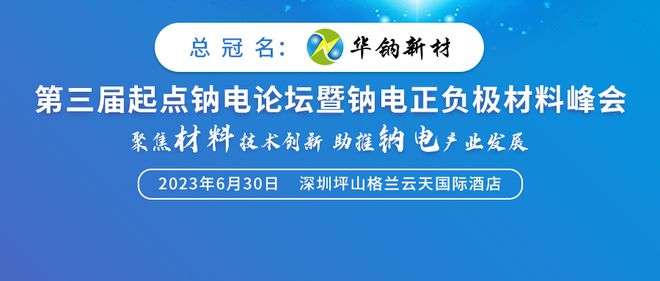
On June 30, 2023, sponsored by Qidian Sodium Electric and Qidian Research, and named by Hua Sodium New Materials General Manager, the Third Qidian Sodium Electric Forum and Sodium Electric Positive and Negative Materials Summit was held in the Grand Ballroom on the second floor of the Conference Center of Yantian International Hotel, Pingshan, Shenzhen.
The theme of this conference is "Focusing on material technology innovation to promote the development of sodium electricity industry", focusing on the technological innovation of positive and negative materials of sodium ion batteries, and jointly discussing the current development pain points and future development trends of sodium batteries and positive and negative materials of sodium batteries.
Shenzhen Pingshan has brought together many famous new energy companies, such as the world's new energy leader BYD, Beitri, and some hidden champions of the new energy industry, such as Labras and other fresh forces like Hua Sodium new materials. In recent years, Pingshan District has vigorously attracted talents, rapidly improved public equipment, and integrated production, ecology and life.
The development of batteries and sodium-ion batteries.
In 1780, Galvani accidentally discovered bioelectricity, and in 1799, Voltaic power piles were discovered, and then batteries developed rapidly, such as lead-acid batteries, alkaline batteries, etc., the driving factor behind the battery is people's demand, but in the later time, battery technology did not progress, because the battery is not cost-effective, etc.
However, after the outbreak of the oil crisis in the 1870s, the battery has been rapid development, from 1968 to 1997, sodium electricity and lithium electricity at the same time rapid development, but in 1991 after the mass production of SONY lithium batteries, lithium ion battery industry rapid development, sodium ion batteries into the slow development period.
Until 2001, it was found that hard carbon can be used as a negative electrode material for sodium-ion batteries, and then iron ions were discovered. From 2011 to 2020, sodium-ion batteries were in the polishing process and demonstration stage, until the price of lithium carbonate soared, and sodium-ion batteries entered the fast lane.
In 2022, everyone predicted that 2023 would be the first year of the industrialization of sodium-ion batteries, but at the beginning of this year, the price of lithium carbonate dropped from 600,000 per ton to more than 100,000, reducing the development speed of sodium-ion batteries. However, after the May Day this year, the price of lithium carbonate returned to 300,000 per ton, and sodium-ion batteries returned to the fast lane. It is now widely believed that the materials used in sodium-ion batteries are commodities, and their price stability is unmatched by lithium-ion batteries, and the development of sodium-ion batteries is unstoppable, and the next year will be the first year of the industrialization of sodium-ion batteries.
Next, look at the drivers of the development of sodium-ion batteries.
The first is policy driven, under the guidance of the national dual carbon policy, has introduced policies to support new energy sodium-ion batteries, led the development of industry standards, and set up a lot of projects, which gives the sodium-ion battery industry confidence.
Second, the reserves of lithium resources are small and uneven, which is also the main reason for lithium price fluctuations. South America's three lithium reserves account for 57%, plus the United States, Australia and Canada, a total of 77%, our energy security can not be guaranteed.
Third, sodium-ion batteries and lithium batteries work similarly, and devices that are amplitude-compatible with lithium-ion batteries can be made.
Fourth, cost, which is also the driving force. Sodium-ion battery raw materials are almost commodities, widely distributed, without constraints, and lithium-ion batteries, commonly used lithium, nickel, cobalt, copper, these elements are more expensive metals, large fluctuations, not conducive to the development of the industry.
Fifth, the market is expected to be very large, by 2025, small power, two-wheelers, electric vehicles and energy storage will be about 2TWh, which does not include power tools, drones and other markets. If sodium electricity occupies 20% of the market space, the scale of sodium electricity industry will reach hundreds of billions by 2025, of which the positive electrode material industry will also reach tens of billions, and the future can be expected!
2023年6月30日,由起点钠电、起点研究主办,华钠新材总冠名的《第三届起点钠电论坛暨钠电正负极材料峰会》在深圳坪山格兰云天国际酒店会议中心二楼格兰宴会厅隆重举办。
本届大会以“聚焦材料技术创新 助推钠电产业发展”为主题,聚焦钠离子电池正负极材料技术创新,共同探讨钠电池及钠电池正负极材料目前发展痛点及未来发展趋势。
深圳坪山人杰地灵,汇聚了众多著名的新能源公司,比如世界新能源龙头比亚迪、贝特瑞,还有一些新能源行业的隐形冠军,比如拉布拉斯等像华钠新材一样的生力军。坪山区近年大力吸引人才,公共设备快速完善,生产、生态、生活“三生”融合。
电池和钠离子电池的发展历程。
1780年伽伐尼偶然发现了生物电,1799年伏打发明了伏打电堆等,随后电池进行了快速的发展,比如铅酸电池、碱性电池等,背后的推动因素是人们的需求,但是在后来的时间里电池技术没有进步,是因为电池没有性价比等,
但是19世纪70年代石油危机爆发以后,电池又得到快速发展,从1968年到1997年钠电和锂电同时快速发展,但是1991年索尼公司量产锂电以后,锂离子电池产业快速发展,钠离子电池进入缓慢发展期。
直到2001年,发现了硬碳可以作为钠离子电池的负极材料,之后先后发现了铁离子等,从2011年到2020年十年间,钠离子电池处于打磨工艺和示范阶段,一直到碳酸锂价格飞涨,钠离子电池发展进入快车道。
2022年,大家都预测2023年是钠离子电池产业化元年,但是今年年初,碳酸锂价格从60万每吨降到了10万以上,减少了钠离子电池发展速度。但是今年五一以后碳酸锂价格又回到了30万每吨,钠离子电池又回到了快车道。现在大家普遍认为,钠离子电池所用的材料都是大宗商品,其价格稳定是锂离子电池无法比拟的,钠离子电池发展不可阻挡,未来一年将是钠离子电池产业化元年。
接下来看一下钠离子电池发展的驱动因素。
首先是政策驱动,在国家双碳政策的引导下,先后出台了支持新能源钠离子电池的政策,牵头制定行业标准,并设立了很多项目,这给钠离子电池产业信心。
第二,锂资源的储量少和分布不均匀,这也是锂价波动的主要原因。南美三国锂储量占比57%,再加上美国、澳大利亚和加拿大,共占比77%,我们的能源安全无法保证。
第三,钠离子电池和锂电池工作原理相似,可以打幅度兼容锂离子电池的设备。
第四,成本,这也是原动力。钠离子电池原材料几乎是大宗商品,分布广泛,没有制约,而锂离子电池中,常用到锂、镍、钴、铜,这些元素都是较贵的金属,波动大,不利于行业的发展。
第五,市场预期非常大,到2025年小动力、两轮车、电动车和储能将到2TWh左右,这还不包括电动工具、无人机等市场。如果钠电占有20%的市场空间,那到2025年钠电行业规模将到几千亿,其中正极材料行业规模也将到大几百亿,未来可期!
本届大会以“聚焦材料技术创新 助推钠电产业发展”为主题,聚焦钠离子电池正负极材料技术创新,共同探讨钠电池及钠电池正负极材料目前发展痛点及未来发展趋势。
深圳坪山人杰地灵,汇聚了众多著名的新能源公司,比如世界新能源龙头比亚迪、贝特瑞,还有一些新能源行业的隐形冠军,比如拉布拉斯等像华钠新材一样的生力军。坪山区近年大力吸引人才,公共设备快速完善,生产、生态、生活“三生”融合。
电池和钠离子电池的发展历程。
1780年伽伐尼偶然发现了生物电,1799年伏打发明了伏打电堆等,随后电池进行了快速的发展,比如铅酸电池、碱性电池等,背后的推动因素是人们的需求,但是在后来的时间里电池技术没有进步,是因为电池没有性价比等,
但是19世纪70年代石油危机爆发以后,电池又得到快速发展,从1968年到1997年钠电和锂电同时快速发展,但是1991年索尼公司量产锂电以后,锂离子电池产业快速发展,钠离子电池进入缓慢发展期。
直到2001年,发现了硬碳可以作为钠离子电池的负极材料,之后先后发现了铁离子等,从2011年到2020年十年间,钠离子电池处于打磨工艺和示范阶段,一直到碳酸锂价格飞涨,钠离子电池发展进入快车道。
2022年,大家都预测2023年是钠离子电池产业化元年,但是今年年初,碳酸锂价格从60万每吨降到了10万以上,减少了钠离子电池发展速度。但是今年五一以后碳酸锂价格又回到了30万每吨,钠离子电池又回到了快车道。现在大家普遍认为,钠离子电池所用的材料都是大宗商品,其价格稳定是锂离子电池无法比拟的,钠离子电池发展不可阻挡,未来一年将是钠离子电池产业化元年。
接下来看一下钠离子电池发展的驱动因素。
首先是政策驱动,在国家双碳政策的引导下,先后出台了支持新能源钠离子电池的政策,牵头制定行业标准,并设立了很多项目,这给钠离子电池产业信心。
第二,锂资源的储量少和分布不均匀,这也是锂价波动的主要原因。南美三国锂储量占比57%,再加上美国、澳大利亚和加拿大,共占比77%,我们的能源安全无法保证。
第三,钠离子电池和锂电池工作原理相似,可以打幅度兼容锂离子电池的设备。
第四,成本,这也是原动力。钠离子电池原材料几乎是大宗商品,分布广泛,没有制约,而锂离子电池中,常用到锂、镍、钴、铜,这些元素都是较贵的金属,波动大,不利于行业的发展。
第五,市场预期非常大,到2025年小动力、两轮车、电动车和储能将到2TWh左右,这还不包括电动工具、无人机等市场。如果钠电占有20%的市场空间,那到2025年钠电行业规模将到几千亿,其中正极材料行业规模也将到大几百亿,未来可期!


Celebration: New company, New factory, New start ( July, 26---2023)
CERAMICS CHINA 2023 June 19-22
Related Article

Wiking Intelligence attended the exhibition with its lab mill, nano rod -pin mill and dual-power mill.
Wiking Intelligence Equipment Made A Shining Show At Ceramic China 2024 (June, 18 - June, 22)

Guangzhou International Advanced Ceramics Industry Chain Exhibition (CAC) is the first professional exhibition in China with advanced ceramics as the only theme.
Wiking Intelligence attended Guangzhou International Advanced Ceramics Industry Chain Exhibition (CAC)(June, 13 - June. 15)

